Why missing Meta Pixel is a strong sales signal
E-commerce sites without Meta Pixel are not just technically incomplete websites. For digital agencies, they are potential clients with a visible measurement gap. If an online store has products, checkout pages, social media activity, seasonal campaigns, or paid traffic potential, the absence of Meta Pixel can directly limit its ability to track conversions, build retargeting audiences, and optimize Meta ads.
This makes the conversation much stronger than a generic cold pitch. Instead of saying, “We can run ads for your store,” an agency can say, “We noticed that your store does not appear to have Meta Pixel installed, which may prevent you from retargeting visitors who viewed products or abandoned carts.” That shift turns the pitch from a broad offer into a specific business diagnosis.
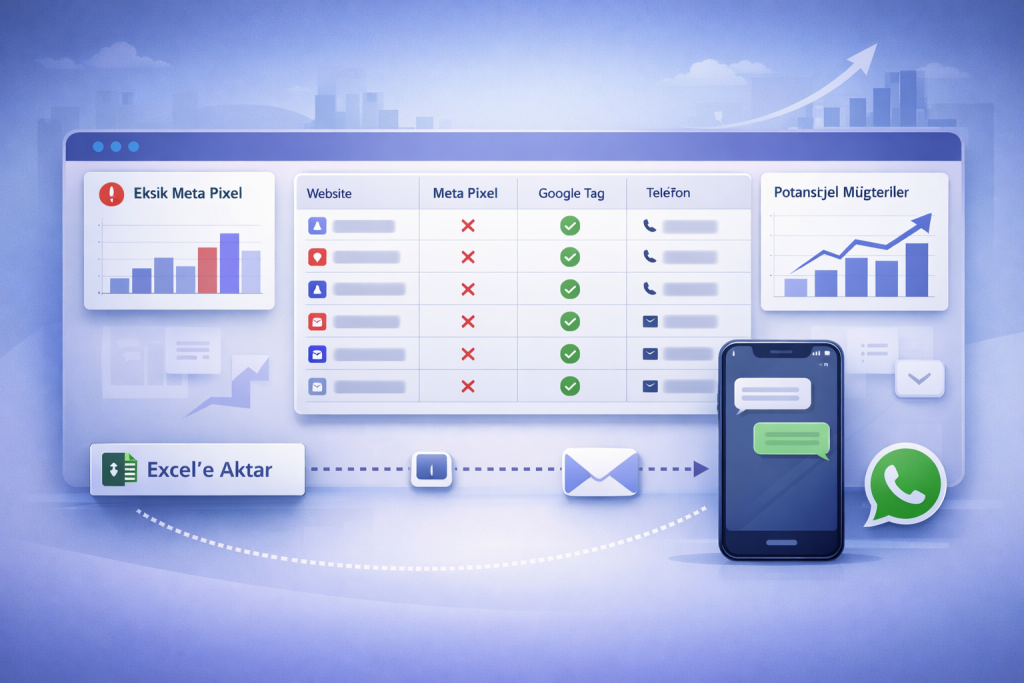
Business Monster helps agencies build this kind of opportunity pipeline by combining business data, phone and email details, social accounts, Meta Pixel and Google Tag detection, Excel export, and WhatsApp tools. The result is a more focused sales workflow: identify the gap, prioritize the right businesses, contact them quickly, and position your service around measurable revenue impact.
Which e-commerce websites should agencies prioritize?
Not every website without Meta Pixel is equally valuable. Some stores may be inactive, while others may already have strong commercial intent but weak tracking. The best prospects are companies that show signs of online sales activity yet lack the infrastructure needed to measure and scale paid advertising.
High-intent signals to look for
- Visible product catalog: Stores with many product pages, categories, discounts, or bundles often have higher ad potential.
- Contact information: Phone and email availability makes outreach faster and more reliable.
- Active social accounts: Businesses posting on Instagram, Facebook, or other platforms are more likely to understand the value of ads.
- Google Tag present, Meta Pixel missing: This often means the business has some measurement awareness but an incomplete setup.
- Competitive categories: Fashion, beauty, furniture, jewelry, pet products, supplements, and local food brands usually benefit from retargeting.
With Business Monster, agencies can evaluate these signals together instead of relying on random prospecting. This improves both the quality of the lead list and the relevance of the sales message.
How Business Monster supports technical lead discovery
Manually checking websites one by one is slow. Opening each store, inspecting code, using browser extensions, copying contact information, and building spreadsheets can consume hours before the sales team even starts outreach. Business Monster is designed to make this discovery process more structured and scalable.
By reviewing business data and digital signals, agencies can identify which e-commerce sites have Meta Pixel, which have Google Tag, and which appear to be missing key tracking components. This allows the team to create a prospect segment such as “e-commerce websites without Meta Pixel” and use that segment for a targeted campaign.
| Data Point | How It Helps Sales |
|---|---|
| Meta Pixel detection | Identifies retargeting and conversion tracking gaps |
| Google Tag detection | Shows whether the business already uses some tracking infrastructure |
| Phone and email | Enables direct outreach and follow-up |
| Social accounts | Reveals brand activity and advertising readiness |
| Excel export | Turns discovered leads into a managed sales pipeline |
| WhatsApp tools | Supports fast, personal, low-friction outreach |
How to frame the sales conversation
The goal is not to overwhelm the prospect with technical jargon. Most store owners do not care about the tag itself; they care about sales, wasted budget, and missed customers. Your message should connect the missing Pixel to a commercial outcome.
A weak pitch
“Your site has no Pixel. We can manage your ads.” This message is too abrupt. It identifies a technical issue but does not explain why it matters or why the business should respond.
A stronger pitch
“We reviewed your online store and could not detect a Meta Pixel signal. This may limit your ability to measure purchases, retarget visitors who viewed products, and optimize campaigns based on real conversion data. Would you like us to share a short checklist of what to fix?”
This version works better because it follows a clear structure: observation, business impact, and a low-pressure next step. The agency is not immediately asking for a contract. It is opening a helpful conversation based on a real technical gap.
Building an outreach list with Excel export
Once you identify e-commerce sites without Meta Pixel, the next step is turning that data into a usable sales pipeline. Business Monster’s Excel export helps agencies organize leads by segment, location, industry, contact availability, social account presence, Meta Pixel status, and Google Tag status.
- Select industries with strong e-commerce potential.
- Filter websites where Meta Pixel is not detected.
- Prioritize businesses with phone, email, and social accounts.
- Mark stores with Google Tag but no Meta Pixel as warmer prospects.
- Create pipeline columns such as contacted, replied, audit sent, meeting booked, proposal sent, and closed.
- Use WhatsApp for short first-touch messages and email for audits, checklists, or proposals.
This workflow prevents the common agency problem of collecting leads but failing to follow up consistently. A structured spreadsheet gives sales teams visibility and accountability.
WhatsApp outreach message example
WhatsApp can be effective for small and mid-sized e-commerce businesses because it feels direct and immediate. However, it should be used carefully. Keep the message short, specific, and permission-based.
Example message: “Hi, we reviewed your online store and could not detect a Meta Pixel signal. This may affect purchase tracking and retargeting for visitors who viewed products or abandoned carts. Would you like us to send a short 3-point checklist?”
If the prospect replies positively, you can send a concise audit note and then introduce your service package: Meta Pixel setup, event configuration, conversion tracking, catalog readiness, retargeting structure, and monthly ad management.
Positioning your service beyond Pixel installation
One mistake agencies make is selling Meta Pixel setup as a small one-time technical task. The bigger opportunity is to position it as the foundation for profitable advertising. Pixel installation is only the starting point. The client also needs events configured correctly, conversion data tested, audiences built, campaigns structured, and performance reviewed.
- Starter setup: Meta Pixel installation, basic event checks, and testing.
- Tracking and analytics package: Meta Pixel, Google Tag review, conversion events, reporting structure, and troubleshooting.
- Growth advertising package: Full tracking setup, campaign management, retargeting funnels, creative testing, and monthly optimization.
This packaging helps the client understand that you are not selling a code snippet. You are selling the measurement and advertising system required to turn traffic into revenue.
Key objections and how to answer them
Some prospects may say they already run ads, their developer handles the website, or they are not ready to spend more. These objections are normal. The best response is to keep the focus on visibility and control.
If they already run ads, explain that missing or incomplete tracking can make it harder to know which campaigns generate purchases. If a developer manages the site, position your agency as the marketing partner that defines what needs to be tracked. If they are not ready for a large campaign, suggest a small technical audit or a starter tracking setup.
The conversation should remain consultative. A missing Pixel is not a reason to criticize the business. It is a reason to offer clarity.
Conclusion: Turn technical gaps into qualified sales opportunities
E-commerce sites without Meta Pixel represent a practical opportunity for agencies because the need is specific, measurable, and tied to revenue. With Business Monster, agencies can combine business data, phone and email details, social accounts, Meta Pixel and Google Tag detection, Excel export, and WhatsApp tools to create a focused outreach process.
The winning approach is simple: find the right stores, verify the tracking gap, explain the business impact, and offer a low-friction next step. When done well, Meta Pixel discovery becomes more than a technical audit. It becomes a repeatable sales channel for advertising services.
